

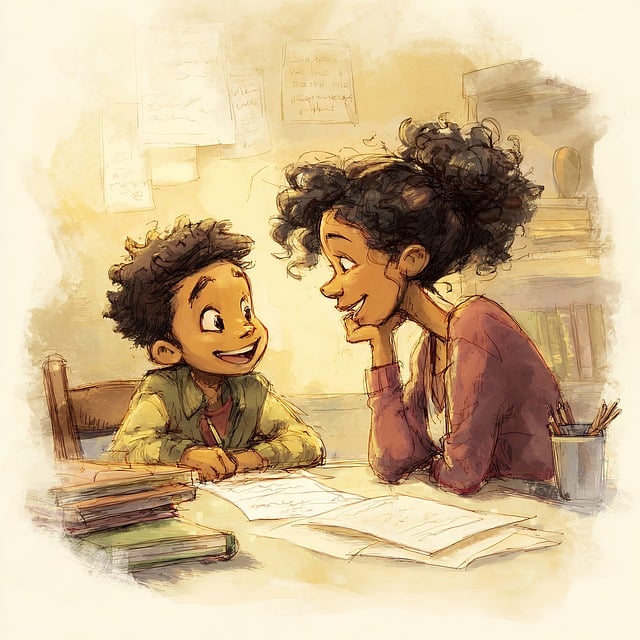
How to Raise Fair-Minded Children: Give Your Child a Fair Hearing Before You Judge


What if one of the most powerful ways to teach your child fairness is simply to be fair to them?
Before you correct your child, have you heard their side?
Before you conclude that they were wrong, have you asked what happened?
Before you discipline them for their behaviour, have you created enough space for them to explain what they were thinking?
Sometimes, in our desire to raise responsible children, we become so quick to judge, correct, punish, or lecture that we forget something fundamental:
Children need to be heard before they can fully understand why they need to change.
And this is where a powerful parenting principle begins:
Give your child a fair hearing. A fair hearing leads to fair dealings.
Your Child Is More Than the Behaviour You See
A child may slam a door.
A child may refuse to obey.

A child may speak disrespectfully.
A child may come home with a disappointing report.
A child may get into conflict with a sibling or friend.



The behaviour is visible.
But the story behind the behaviour may not be.
Perhaps your child misunderstood the situation.
Perhaps someone provoked them.
Perhaps they were afraid to tell you what really happened.
Perhaps they made a poor decision.
Or perhaps they genuinely did something wrong.
Even when your child is wrong, they still deserve an opportunity to be heard.
Giving them a fair hearing does not mean excusing unacceptable behaviour.
It means separating understanding from approval.
You can understand what happened without approving of the behaviour.
That distinction can transform the way you parent.
A Child Who Is Heard Learns to Tell the Truth
Think about what happens when children believe that their parents will automatically condemn them.
They may begin to hide things.
They may become afraid to explain themselves.
They may tell only the part of the story they think will keep them out of trouble.
Eventually, communication becomes difficult.
But when children know:
“My parent will listen to me before making a judgment,”
they are more likely to come forward.
They learn that truth does not require them to be perfect.
They learn that mistakes can be discussed.
They learn that accountability and compassion can exist together.
That is an invaluable lesson for life.
Fair Hearing Does Not Mean Taking Your Child’s Side
This is important.
Giving your child a fair hearing does not mean believing everything they say without question.
It does not mean protecting them from consequences.
It does not mean allowing disrespect.
It does not mean teaching them that they are always right.
It means saying:
“I want to understand what happened before I decide what needs to happen next.”
That simple posture changes the atmosphere.
Instead of:
“What did you do?”
you might begin with:
“Tell me what happened.”
Instead of:
“Why would you do something like that?”
you might ask:
“What were you thinking at the time?”
Instead of immediately delivering a verdict, you create an opportunity for truth.
And sometimes, the truth changes everything.
Listen for the Lesson Behind the Incident
Every difficult situation can become a classroom.
Perhaps your child needs to learn about honesty.
Perhaps they need to learn about self-control.
Perhaps they need to learn how to resolve conflict.
Perhaps they need to apologize.
Perhaps they need to make restitution.
Perhaps they need to understand that their choices have consequences.
But if you rush straight to punishment, you may correct the behaviour without teaching the deeper lesson.
The goal is not merely to stop the behaviour.
The goal is to help shape the mind and character behind the behaviour.
That is parenting beyond correction.
That is parenting with purpose.
Fairness Begins at Home
Children are constantly learning what fairness looks like.
They watch how we treat them.
They watch how we treat their siblings.
They watch how we respond when someone makes a mistake.
They watch whether we listen to both sides of a disagreement.
They watch whether authority means:
“I am bigger, so I am automatically right.”
Or whether authority can mean:
“I am responsible for guiding you, and I will still treat you with dignity.”
When a child experiences fairness at home, they begin to understand fairness as a way of life.
They learn to listen before judging.
They learn to consider another person’s perspective.
They learn that every story may have another side.
They learn that justice requires understanding.
And eventually, they carry those lessons into friendships, relationships, workplaces, communities, and society.
Your Child May Not Need Another Lecture
Sometimes what a child needs most in a difficult moment is not another lecture.
They need a listening parent.
A parent who can pause.
A parent who can ask questions.
A parent who can listen without immediately exploding.
A parent who can say:
“I hear you.”
Then, after hearing them:
“Now let’s talk about what you could have done differently.”
That is where correction becomes constructive.
The child is not simply being told what they did wrong.
They are being helped to think.
And when children learn how to think through their choices, they become better equipped to make wiser choices when you are not there.
The Powerful Connection: Hearing → Understanding → Fairness → Responsibility
There is a progression worth remembering:
Give them a hearing.
↓
Help them feel understood.
↓
Teach them to understand another person’s perspective.
↓
Hold them accountable for their choices.
↓
Teach them to make things right.
This is not permissive parenting.
It is purposeful parenting.
You are not removing boundaries.
You are building character within boundaries.
Try This the Next Time Your Child Gets Into Trouble
Before responding, pause and ask yourself:
“Do I know the whole story?”
Then invite your child to speak.
Try these questions:
- “What happened?”
- “What happened before that?”
- “How did you feel?”
- “What were you thinking?”
- “What part do you think you could have handled differently?”
- “What do you think the other person experienced?”
- “What can you do to make things right?”
Notice what these questions do.
They don’t simply gather information.
They teach your child reflection, empathy, responsibility, and problem-solving.
And those qualities are far more valuable than simply getting a child to obey in the moment.
Sometimes the Fair Hearing Will Reveal That Your Child Was Wrong
And that’s okay.
Your child does not have to be innocent for you to listen.
In fact, some of the most important conversations happen after we discover that our children genuinely made a poor choice.
You can say:
“I understand what happened now. I can see why you felt that way. But feeling that way does not make that behaviour acceptable. Let’s talk about what you can do differently next time.”
That message carries both grace and accountability.
Your child learns:
“My feelings matter, but my feelings don’t excuse harmful choices.”
“My parent listens to me, but listening does not mean I escape responsibility.”
“I can make mistakes and still be guided toward better choices.”
Those are powerful foundations for adulthood.
A Fair Hearing Can Become a Generational Legacy
Imagine a generation of children who grow up knowing how to listen before judging.
Children who know how to disagree without immediately attacking.
Children who can admit when they are wrong.
Children who understand that fairness requires hearing both sides.
Children who know that authority and compassion can coexist.
Children who become adults capable of resolving conflicts rather than constantly escalating them.
It begins with something as simple as this:
Listen before you label.
Understand before you condemn.
Correct without humiliating.
Hold accountable without withholding dignity.
Because when we give children a fair hearing, we are not merely settling today’s argument.
We are teaching them how to deal fairly with people tomorrow.
Give Your Child a Fair Hearing
The next time your child comes to you with a difficult situation, resist the temptation to deliver an immediate verdict.
Pause.
Listen.
Ask questions.
Seek understanding.
Then guide.
Because your child is learning more than what you are saying.
They are learning how people should treat one another.
And perhaps this is one of the greatest lessons we can give them:
A fair hearing leads to fair dealings.
Parent with purpose.
Listen with intention.
Correct with wisdom.
Raise a generation that knows how to treat people fairly.
Reflection for Parents
The next time I am tempted to judge my child quickly, I will pause and ask:
“Have I heard the whole story?”
That one question could change the conversation—and perhaps change the child.
https://l1nk.dev/nonfictionbookcatalogforpersonaltransformation
https://successrecipeblog.com/inscription-how-to-awaken-the-creative-genius-within-you/